
Cookies Policy

The website of the University of Cádiz uses its own and third-party cookies to carry out analysis of use and measurement of traffic, as well as to allow the correct functioning in social networks, and in this way to improve your browsing experience.

If you want to configure cookies, press the button Customize Cookies. You can also access the cookie settings at any time from the corresponding link in the footer.

For more information about cookies you can consult the Cookies policy from the website of the University of Cádiz.

Cookies customization

The website of the University of Cádiz uses its own and third-party cookies to carry out analysis of use and measurement of traffic, as well as to allow the correct functioning in social networks, and in this way to improve your browsing experience.

For more information about cookies you can consult the Cookies policy from the website of the University of Cádiz. You can also access the cookie settings at any time from the corresponding link in the footer.

You can configure the website cookies according to their purpose:

  • Statistical analysis

    Third-party cookies (Google Analytics) are used on this site that allow the number of users to be quantified anonymously (personal data will never be obtained to identify the user) and thus be able to analyze the use made by users of our service, in order to improve the browsing experience and offer our content optimally.

  • Social networks

    Third-party cookies are used on this website that allow the proper functioning of some social networks (mainly YouTube and Twitter) without using any personal data of the user.

UniversidaddeCádiz
12TH INTERNATIONAL JOINT CONFERENCE ON ROUGH SETS

Tutorials

IJCRS2026 will host the following Tutorials:


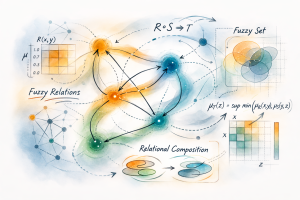
Fuzzy Relational Calculus as a Fundamental yet Powerful Concept


Introduction

Fuzzy set theory introduced a mathematically precise way of handling graded membership and vague concepts, providing a flexible framework for modeling situations where sharp boundaries are neither available nor desirable. From its earliest formulations, the theory has supported a wide spectrum of extensions aimed at representing structured information and graded relationships between objects.

Within this broader framework, fuzzy relations arise as natural generalizations of classical relations, enabling the formal representation of dependencies, constraints, and interactions in a graded setting. Fuzzy relational calculus builds on this idea by treating relations as fundamental objects of study and by providing systematic mechanisms for constructing new relations from existing ones through well-defined operations. An important part of the tutorial is devoted to fuzzy relational compositions, which naturally emerge within this framework as key mechanisms for relating and propagating information between relational structures. These compositions form a bridge between elementary relational descriptions and more complex constructions, allowing the development of models that are expressive, transparent, and easy to interpret. By embedding fuzzy relational compositions into a broader relational calculus, the tutorial clarifies their role and significance within the general landscape of fuzzy relational modeling. Several potential applications and applicational areas are also presented.

This tutorial presents fuzzy relational calculus as a foundational framework for working with fuzzy relations. Emphasis is placed on the principles governing relational constructions and on how different design choices influence the expressive power and behavior of the resulting models. Links to Rough Sets Theory are also provided. Although the two theories are motivated differently, they exhibit an extremely rich overlap in the mathematical concepts and tools they employ, which creates a unique potential for inheriting results from one to the other.

Organizer: Martin Štěpnička

Martin Stepnicka received his habilitation (Docent – Associative Professorship) in Applied Mathematics at the University of Ostrava in 2012. Since March 2023, he is the Vice-rector for Research and Artistic Activities at the University of Ostrava. Beforehand, he served as the Director of the Centre of Excellence IT4Innovations – Institute for Research and Applications of Fuzzy Modeling, University of Ostrava for two years and he held the vice-director and senior researcher position in the preceding years. Martin Stepnicka also held the positions of the President of the European Society for Fuzzy Logic and Technology (EUSFLAT) for two consecutive terms – elected in 09/2017 and re-elected in 09/2019.

He is an Area Editor of JCR journals Fuzzy Sets and Systems, International Journal of Approximate Reasoning, and International Journal of Computational Intelligence Systems, and furthermore, an editorial board member and guest editor member of other journals. His research interests mainly include fuzzy modeling, especially fuzzy inference systems and fuzzy relational calculus. His research in this area led to the FUZZ-IEEE Best Paper Award in 2016 (Vancouver, Canada) for the paper “On the Satisfaction of Moser-Navara Axioms for Fuzzy Inference Systems”.


fcaR: FCA for Knowledge Extraction in Real-World Environments

Introduction

Formal Concept Analysis (FCA) has become a mathematical data analysis tool that enables the extraction of concept hierarchies and implications from relational data. The core of FCA lies in lattice theory and logic.

Despite its theoretical robustness, its application in production environments and real-world problem solving is often limited by the complexity of the available tools. In this seminar, we will explore how the fcaR package for the R language simplifies the workflow by providing an integrated ecosystem for the creation, manipulation, and visualization of formal contexts, concepts, and implication sets.

Through practical use cases, we will demonstrate how fcaR makes it possible to transform raw data into knowledge. We will see how to identify hidden structures in data and perform classification and recommendation tasks based on rules. The aim is for participants to understand not only the underlying theory of FCA, but also how to implement computationally efficient solutions for data analysis and knowledge discovery using this package.

Organizer: Ángel Mora and Domingo López-Rodríguez

GrC Techniques on Simple Undirected Graphs

Introduction
In this tutorial we present a new formal framework for Rough Set Theory along with various applications to graph theory. By emphasizing intuition, our purpose consists of explaining the mathematical foundation of several notions and techniques of Rough Set Theory based on Pawlak’s information tables via examples and potential applications rather than technical formalism.
The tutorial is organized into two main parts. The first part introduces the conceptual background needed to understand the proposed approach. The second part of the tutorial is devoted to the application of the aforementioned mathematical setting to graph theory, with the specific purpose of determining new structural properties of simple undirected graphs. The main goal of this tutorial is to establish a solid connection between a new mathematical formalization of Rough Set Theory and graph theory, showing how granular computing tools can be systematically used to describe and analyze structural properties of simple undirected graphs. Overall, focusing on intuition, examples and applications rather than technical proofs, the tutorial illustrates how granular methods provide a flexible and systematic approach to the study of graphs. For more information, see here.
Organizer: Federico Infusino
He obtained his degree cum laude in Mathematics from the University of Calabria, where he also earned a PhD in Mathematics and Computer Science. He has previously held positions as RTDa (fixed-term researcher) and Research Fellow at the University of Calabria, and has served as a Visiting Research Fellow at the University of Castilla-La Mancha (Spain) and at the Centre for Mathematics of the University of Coimbra (Portugal) as winner of a competitive fellowship founded by INDAM (Istituto Nazionale di Alta Matematica). He also taught a course at the Spring School Boolean Network Models: Theory, Methods and Applications in Science and Engineering at the University of Castilla-La Mancha. He obtained the Italian National Scientific Qualification (ASN, second level) in Algebra and Geometry (01/A2). He serves as a reviewer for several internationally recognized journals and has participated in numerous international conferences as a speaker. He is the author/co-author of 38 peer-reviewed journal articles (see his Scopus page). His main research interests include simplicial complexes, matroids and graph theory, algebraic methods in rough set theory and granular computing, category theory, with particular regard to the categorical foundations of homotopy theory.

Rule-Driven Pattern Discovery Across Data Representations

Introduction
The theory of three-way decision (3WD), rooted in a philosophy of thinking in threes, a methodology of working with threes, and a mechanism of processing through threes, provides a comprehensive framework for processing information, managing uncertainty, and making intelligent decisions. Since its formalization by Professor Yiyu Yao in the early 2010s, 3WD has evolved from an extension of rough set probabilistic models into a methodology for problem-solving in complex systems. It also serves as a bridge between rough set theory and granular computing, offering a valuable mechanism to handle decisions, acceptance, rejection, and non-commitment via triadic structures.
As we approach IJCRS 2026, the relevance of 3WD has expanded significantly. Recent advancements and publications in 3WD have highlighted the critical role of triadic thinking and three-world thinking in fostering organizing and processing information through multi-level and multi-granularity approaches. This special session aims to explore the intersection of 3WD with the core themes of IJCRS 2026, particularly focusing on granular computing, three-way data analytics, and cognitive computing.
By integrating the strict mathematical foundations of rough sets with the flexibility of 3WD, this special session seeks to address contemporary challenges in AI, such as explainability, dynamic learning, and big data analytics. We invite researchers to submit original works that push the boundaries of 3WD theory or demonstrate its efficacy in real-world applications in various fields.
Organizer: Beata Zielosko

Beata Zielosko works as an Associate Professor at the University of Silesia in Katowice. She is the head of the research group dealing with decision rules in knowledge discovery and representation. From October 2022, she has served as deputy director of the Institute of Computer Science at the Faculty of Science and Technology of the University of Silesia in Katowice. From 2011 to 2013, she worked as a senior research scientist at the King Abdullah University of Science and Technology in Saudi Arabia.

Beata Zielosko is a co-author of four research monographs published by Springer and over 60 papers published in journals and international conference proceedings. She is also a co-editor of the PP-RAI 2025 and IJCRS 2017 proceedings and co-editor of an international monograph on feature selection. She is a member of the International Rough Set Society, KES International and the Polish Artificial Intelligence Society. Her research interests include pattern recognition, knowledge discovery, feature selection, rough sets methods for data processing and artificial intelligence.


Modal Logics for Multigranulation Rough Set Models

Introduction
Rough set theory provides a foundational framework for modelling vagueness and uncertainty through approximation operators induced by indiscernibility relations. From its inception, the modal character of rough set approximations has been evident. This tutorial presents a systematic introduction to modal logics whose semantics are grounded in rough set theory, encompassing both classical foundations and recent developments.
Another part of the tutorial covers the role of relative accessibility relations, which arise naturally when approximations are considered relative to attribute sets or information sources. The tutorial also addresses temporal information systems, in which information systems evolve over time and approximation operators become time-dependent. Reasoning about such dynamic settings requires modal frameworks capable of capturing changing granularity, evolving attribute-values, and persistence of information across time. For more information, see here.
Organizer: Mohua Banerjee
Mohua Banerjee is Professor at the Department of Mathematics and Statistics, Indian Institute of Technology Kanpur, having served as Head of the department during 2022-2025. Her research interests lie in Logics, Algebras and Applications of Rough Set Theory and Modal Logics, and she has publications in leading international journals. She has held visiting research positions in several international institutes. Currently, she is Chairperson, Executive Committee of the Association for Logic in India, and also a member of the Committee on Logic in East Asia, Association for Symbolic Logic. Earlier, she was a member of the Steering Committee, Indo-European Research and Training Network in Logic (IERTNiL: 2013-2017). She is a member of the Editorial Board, Fuzzy Sets and Systems (Elsevier); earlier she served as member of the Editorial Board, Transactions on Rough Sets (till 2023). She has organized several national and international conferences/workshops on logic and rough sets over the years.
Prof. Banerjee is a Fellow of the International Rough Set Society (IRSS), and received the prestigious Indian National Science Academy (INSA) Award for Young Scientists in 1995. For further details, see here.