

Plenary Panel – Commemorating the 100th anniversary of the birth of Zdzisław Pawlak

Beata Zielosko
 Beata Zielosko works as an Associate Professor at the University of Silesia in Katowice. She is the head of the research group dealing with rule-based models used in knowledge discovery and representation. From October 2022, she has served as deputy director of the Institute of Computer Science at the Faculty of Science and Technology of the University of Silesia in Katowice. From 2011 to 2013, she worked as a senior research scientist at the King Abdullah University of Science and Technology in Saudi Arabia.
Beata Zielosko is a co-author of four research monographs published by Springer and over 60 papers published in journals and international conference proceedings. She is also a co-editor of the PP-RAI 2025 and IJCRS 2017 proceedings and co-editor of an international monograph on feature selection. She is a member of the International Rough Set Society, KES International and the Polish Artificial Intelligence Society. Her research interests include rough set methods for data processing, pattern recognition, knowledge discovery, feature selection, and AI.
Dominik Slezak (panel moderator)
 Dominik Ślęzak received a Ph.D. in Computer Science in 2002 from the University of Warsaw in Poland. In his early academic career, he worked at the Polish-Japanese Academy of Information Technology. In 2003-2006, he worked as an Assistant Professor at the University of Regina in Canada. He also cooperated as an Adjunct Professor with McMaster University and York University. In 2008, he re-joined the University of Warsaw, where he now holds the position of Full Professor at the Institute of Informatics. He is a co-author of over 200 scientific articles in the fields of Data Intelligence, Big Data Processing, and Uncertainty Modeling. He delivered invited plenary talks at over 20 international conferences. In 2020, he was awarded the scientific title of Professor by the President of the Republic of Poland.
Professor Ślęzak actively contributes to the growth of the international academic community. He chaired over 20 scientific conferences in Asia, Europe, and both Americas. He regularly co-organizes sessions and – using the KnowledgePit platform, which he co-created – Data Science Competitions at the IEEE Big Data and FedCSIS conferences. He is an Associate Editor and Editorial Board Member for international scientific journals, including Information Sciences and Intelligent Information Systems. He serves as the President of the Polish Artificial Intelligence Society. He served as President of the International Rough Set Society and Vice President of IEEE CS Technical Committee on Intelligent Informatics. He was one of the Founding Editors of Communications in Computer and Information Science.
Professor Ślęzak is also continually engaged in the industry and commercial projects. In 1999, he co-founded QED Software – an R&D company where he leads the development of innovative solutions based on Artificial Intelligence and Machine Learning. In 2005, he co-founded Infobright, where he co-designed the Analytical Database Engine Technology based on Rough Sets and Information Granulation. In 2025, he founded QEDEX, where he leads the development and commercialization of the Agentic Data Intelligence Platform, which revolutionizes Business Intelligence by combining the advantages of Conversational Artificial Intelligence and Automated Data Exploration. He also cooperates or cooperated with several other companies, including Arahub, DeepSeas, Grail Team, OnstageAI, OvuFriend, Toolbox for HR, and Vertis. He is a co-inventor of over 20 US patents and patent applications.
Ernestina Menasalvas
 Ernestina Menasalvas (F). Computer Scientist and PhD in Computer Science. She leads the MIDAS “Data Mining and data simulation group” at the Center of Biotechnology in UPM and she is databases and data mining professor at UPM. Associate Dean of studies and Associate Rector for Graduate Studies (2004-2012). Co-leads the task force on skills in the BDVA-DAIRO. Her research integrates different aspects of data analytics; with the involvement in different real-world problems with special emphasis on health. She has participated actively in project development (HE, H2020, FP7, EIT). She has published more than 40 papers in journals including Data and Knowledge Engineering Journal, Physics Reports, Information Sciences, Expert Systems with applications and Journal of Medical Systems and International and actively participated in International Program Commitees.
Hong Yu
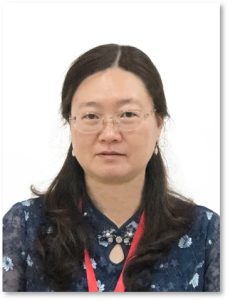 Hong Yu is a professor at Chongqing University of Posts and Telecommunications in China and an Academic Leader in Intelligent Science & Technology in Chongqing.
Her research interests focus on rough sets, three-way decisions, machine learning, industrial big data, medical data analysis, autonomous driving decision-making, knowledge discovery and data mining.
Her researches have been funded by the National Natural Science Foundation of China. She received a Chongqing Natural Science and Technology Award. She has published 5 books and 80 research articles. She holds 10 patents and has 12 software copyrights.
Hung Son Nguyen
 Hung Son Nguyen received his Ph.D. and D.Sci. (Habilitation) degrees in 1997 and 2008, respectively. He is currently a Professor at the University of Warsaw. His primary research interests include the fundamentals and applications of rough set theory, data mining, text mining, bioinformatics, intelligent multi-agent systems, soft computing, and pattern recognition.
He has authored over 160 research papers in international journals, edited books, and conference proceedings. Professor Nguyen has led or participated in numerous research and commercial projects funded by the European Union, as well as the Polish and Vietnamese governments. He is a Fellow of the International Rough Set Society and serves on the Editorial Boards of several journals, including Transactions on Rough Sets, ERCIM News, and Computational Intelligence. His leadership experience includes serving as Managing Editor of Fundamenta Informaticae (until 2017) and Data Mining and Knowledge Discovery (2005–2008). Additionally, he has served as Program Co-Chair for RSCTC’06, RSKT2012, IJCRS2018, and CS&P2022, and as a Program Committee member for numerous international conferences.
JingTao Yao
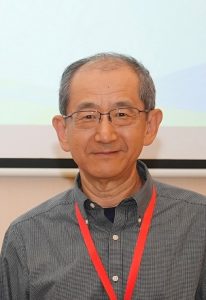 Dr. JingTao Yao received a Ph.D. degree from the National University of Singapore. He is currently a Professor with the Department of Computer Science, University of Regina, Canada. Dr. Yao serves as an Area Editor of International Journal of Approximate Reasoning, Special Section Editor of Cognitive Computation, and a member of Editorial Boards of various international journals. He is currently the Steering Committee Chair, a Fellow, and past President of the International Rough Set Society. He was a member of Canada NSERC Discovery Grant Selection Committees and Evaluation Groups: Computer Science from 2017 to 2020, and 2026. He has been a Chair or a member of the Program Committee of numerous international conferences and has edited many volumes of conference proceedings.
Dr. Yao’s research interests include machine learning, deep learning, federated learning, rough sets, data science, three-way decision, and Web-based support systems. He has over 180 refereed journal articles and conference papers published in these areas and has received about 8,000 citations according to Google Scholar. He has three highly cited papers (top 1%) and one hot paper (top 0.1%) according to Web of Science. Dr. Yao has been recognized as a top 90,000 (top 0.77%) scientist across all scientific fields over half century based a new standardized citation metrics developed by scientists led by Stanford University.
Mohua Banerjee
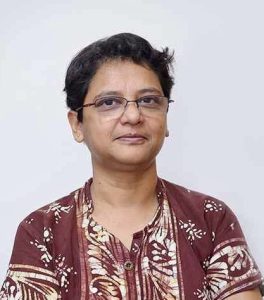 Mohua Banerjee is Professor at the Department of Mathematics and Statistics, Indian Institute of Technology Kanpur. She served as Head of the department during 2022-2025. Her research interests lie in Logics, Algebras and Applications of Rough Set Theory and Modal Logics, and she has publications in leading international journals. She has held visiting research positions in several international institutes. Currently, she is Chairperson, Executive Committee of the Association for Logic in India, and also a member of the Committee on Logic in East Asia, Association for Symbolic Logic. Earlier, she was a member of the Steering Committee, Indo-European Research and Training Network in Logic (IERTNiL: 2013-2017). She is a member of the Editorial Board, Fuzzy Sets and Systems (Elsevier); earlier she served as member of the Editorial Board, Transactions on Rough Sets (till 2023). She has organised several national and international conferences/workshops on logic and rough sets over the years.
Prof. Banerjee is a Fellow of the International Rough Set Society (IRSS), and received the prestigious Indian National Science Academy (INSA) Award for Young Scientists in 1995. For further details: https://home.iitk.ac.in/%7Emohua/index.htm
Salvatore Greco
 Salvatore Greco is Full Professor at the Department of Economics and Business, University of Catania (Italy). His research focuses on Multiple Criteria Decision Analysis (MCDA), preference modeling, and robust ordinal regression, with a pioneering role in integrating Rough Set Theory into decision-making models.
He has played a leading role in the international scientific community, serving as President of the MCDM Section of INFORMS (2022–2023) and, since 2010, as a coordinator of the EURO Working Group on Multiple Criteria Decision Aiding. His contributions have been recognized with the MCDM Gold Medal (2013), the highest distinction in the field, and an honorary PhD from Poznan University of Technology (2024).
Professor Greco is Editor-in-Chief of Decisions in Economics and Finance and serves on the editorial boards of leading journals, including the European Journal of Operational Research and Fuzzy Sets and Systems. Listed among the World’s Top 2% Scientists by Stanford University, his work has received over 30,000 citations (Google Scholar, h-index 81), reflecting his lasting impact on operational research and decision sciences.
Yiyu Yao
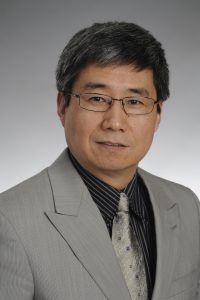 Yiyu Yao is a professor of computer science with the Department of Computer Science, University of Regina, Canada. His research interests include three-way decision, granular computing, Web intelligence, rough sets, fuzzy sets, interval sets, formal concept analysis, information retrieval, machine learning, and data mining. He proposed a theory of three-way decision, a decision-theoretic rough set model, and a triarchic theory of granular computing. He has published over 400 papers. He was selected as a highly cited researcher by Clarivate from 2015 to 2019. He served as the President of International Rough Set Society (2017-2018). He is the President of Web Intelligence Academy. He serves as an associate editor of International Journal of Approximate Reasoning, Information Sciences, Applied Intelligence, and Cognitive Computation, and an editorial board member of others.